


Why map the microclimate?
Not every point in a greenhouse warms, ventilates or loses moisture at the same rate. Doors, fans, shading, crop density and roof height change humidity behaviour. Mapping makes these differences visible before design.
How are measuring points selected?
Points are selected around crop rows, air inlets, fan outlets, shaded areas and hot corners. The goal is to see not only averages but also extremes that affect plant development.
How does it guide nozzle placement?
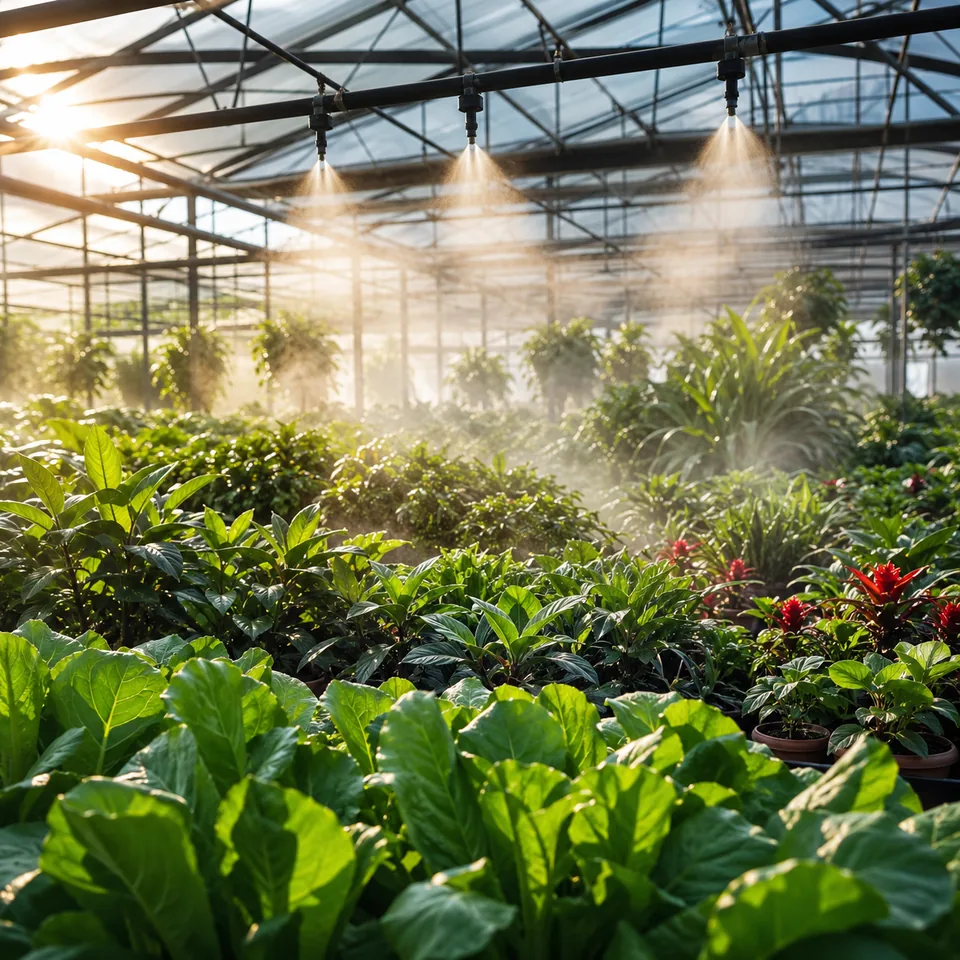
Nozzle spacing, line height and spray direction are matched with the warm and dry areas in the map. This supports balanced humidity without unnecessary wetting.
How does automation use the data?
Humidity sensors and timing controls help the system run only in the required zones. This keeps water, energy and maintenance costs more predictable.
View field photos
Microclimate Mapping for Greenhouse Humidification konusunda saha görselleri, uygulama detayları ve ilgili hizmet yönlendirmeleriyle projeyi daha net değerlendirin.
SSS
Is it useful for small greenhouses?
Yes. Doors, fans and crop density can create humidity differences even in compact greenhouses.
Does mapping increase cost?
It can reduce unnecessary equipment and operating cost by improving capacity selection.
Get technical assessment
Microclimate Mapping for Greenhouse Humidification konusunu saha koşullarınıza göre netleştirmek için MEGAMİST ekibiyle hizmet sayfası üzerinden görüşebilirsiniz.